David's Stool by P.M. Coston: A Wilderness Survival Novel About Fear, Family, and the One Thing Worth Coming Home For
David's Stool by P.M. Coston is a gripping wilderness survival novel about a 13-year-old boy alone for a year in the Canadian bush. Read the story behind it.
There is a moment in almost every wilderness survival novel where the hero stops panicking and starts thinking. In David's Stool, the newest survival fiction release from author P.M. Coston, that moment takes a very long time to arrive — and that is exactly what makes the book worth reading.
Thirteen-year-old David Lee Barbeau, Jr. survives a bush-plane crash in the Canadian north woods. His uncle does not. The pilot dies at the controls, his weight pinning the yoke, and the little canvas-covered aircraft goes into the treetops. David walks away with a broken arm, torn-open wounds across his chest, and no idea where on earth he is.
Then he stays there for a year.
If you have been searching for teen survival books for adults, plane crash survival fiction, or simply a coming-of-age novel with real stakes, this is the story. You can find David's Stool in ebook, paperback, and hardcover editions at pmcoston.com.
What Is David's Stool About?
The title sounds like a riddle until you understand the object at the center of it.
Before the crash, David's father built him a small wooden step stool out of hemlock, oak, and cedar — handmade, name burned into the cedar plate, sealed under coat after coat of polyurethane. It existed for one reason: a ten-year-old boy could not climb into his father's big diesel pickup without help. David outgrew the need years ago. He refuses to let his father throw it out.
"You are my rock, and Mom is my metal, but I need a connection with you both; that is my stool."
That stool rides in the back seat of the truck through every chapter of the book, including all the ones where nobody knows whether David is alive. It is a father's craftsmanship, a mother's design, and a marriage that is quietly coming apart at the seams. It is also the thing David thinks about when he is starving.
The survival story itself is meticulously grounded. David sets his own arm. He hollows out the rotted center of an enormous oak and turns it into a shelter he can heat. He boils river water in a bucket salvaged from the wreck. He builds drop traps for rabbits, squirrels, and field mice, catches fish and crawdads, digs a latrine well away from his water source, and lays out an SOS in aluminum panels stripped from the fuselage. He scavenges the plane's generator, batteries, and voltage controller and wires himself electricity.
He is, in other words, extraordinarily capable. And he is still terrified almost every single day.
Why This Survival Novel Is Different
Most survival adventure books treat fear as a first-act problem to be solved and discarded. Coston refuses that shortcut. In the author's own framing, David's biggest enemy was never the cold or the bears — it was the possibility that he would fail not for lack of knowledge, but for lack of a willingness to try.
Three things set David's Stool apart from the crowded shelf of outdoor survival fiction:
1. The science is real, and it is doing narrative work
David is a science-fair kid — the sort who electrolyzes distilled water and burns the hydrogen in an O-scale locomotive he engineered himself. Tree identification, mineral assay, edible-plant knowledge, basic electrical theory, lapidary work on a diamond-bearing volcanic pipe he stumbles into: none of it is set dressing. Every skill his parents taught him in the first two chapters becomes the thing that keeps him breathing in the middle of the book.
2. A rare premise: acquired savant syndrome
Coston puts forward an unusual conjecture at the heart of the novel. David's head injury from the crash leaves him with permanent damage — and, the author argues, with acquired savant syndrome, the real and documented phenomenon in which brain trauma unlocks extraordinary cognitive ability. The book openly invites the reader to judge whether the argument holds. That is an unusually confident move for a survival novel, and it turns the back half of the story into something closer to speculative literary fiction.
3. The rescue is not the ending
David is found by Jonas and his family — Indigenous traders running a remote post — and what follows is the part most books skip. Post-traumatic stress. Survivor's guilt. A body that healed wrong. And David's decision to take the recovery skills he learned alone in the woods and aim them at his community's problems: poverty, disenfranchisement, and the long shadow of the residential and boarding school system that separated Indigenous children from their families across both the United States and Canada.
The novel handles that history with real weight. David is one-quarter Ottawa through his mother, Lilly Water Flower, and his return home is as much about claiming that inheritance as it is about recovering from injury. Readers looking for Native American fiction or Indigenous-themed novels will find substantially more here than a survival backdrop.
Who Should Read David's Stool?
This book is a strong fit if you are looking for:
- Books like Hatchet but written for grown readers — the same lost-boy-in-the-north premise, expanded to a full year and a far more complicated aftermath
- Wilderness survival novels with technically accurate bushcraft, trapping, shelter-building, and foraging
- Father-and-son stories and family fiction about marriages under strain
- Coming-of-age fiction where the protagonist genuinely changes rather than simply endures
- Book clubs — the questions about success, disability, fear, and reconciliation practically write their own discussion guide
- Reluctant teen readers and their parents, plus classroom and library collections building out survival literature units
Fans of Gary Paulsen, Jon Krakauer's Into the Wild, Lost in the Barrens, and Peter Heller's outdoor fiction will recognize the territory — and find that Coston stays in it far longer than most.
About the Author: Who Is P.M. Coston?
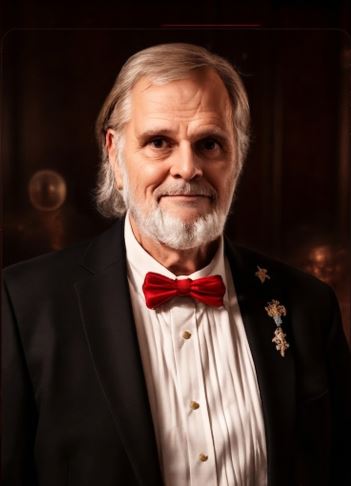
Philip M. Coston is a lifelong writer who spent most of his career publishing elsewhere before he published fiction. He wrote trade articles for professional magazines, produced a safety newsletter for the Virginia Department of Agriculture, and wrote short stories for decades — keeping, by his own cheerful admission, every rejection notice. He holds a PhD; his thesis was a case study on restorative justice, a theme that runs straight through his novels.
He published his first novel, Major Mistake, in 2025 at the age of 77.
Since then he has built a catalog that is remarkable for its range. As the tagline on his author site puts it: heroes are haunted, justice is personal, and love often arrives with a body count.
Other Books by P.M. Coston
If David's Stool is your entry point, the rest of the catalog runs in three very different directions. Every title is available directly at pmcoston.com/books.
The Michael Dunn military thrillers
A billionaire psychopath, a criminal enterprise that behaves like a defense contractor, and a manhunt that spans continents.
- Major Mistake — a ghost military unit that officially does not exist, stealing, committing treason, and carrying out unsanctioned kills.
- Plausible Deniability — Dunn faces court-martial, and the Department of Defense discovers that no prison holds a man who owns the guards. Recommended for readers of Tom Clancy and Lee Child.
- General Alarm — hunted by every agency in the United States, Dunn runs for Shannon County, Ireland.
- Corporal Punishment — Leila has spent years absorbing what her husband dishes out. This time it comes back to him.
- A Thomas Michael Dunn Military — the Enterprise and the World Warehouse are under attack, and the trap may finally be closing.
The B.T. Barnett "Peaches" private-investigator series
Bernard "B.T." Barnett and his wife Janice work cases out of Richmond, Virginia, argue constantly about how much force is too much, and keep running into the Russian mob.
- When Peaches Weep
- When Peaches Win
- When Peaches Are Alluring
- When Peaches Love You Back
- When Peaches Are in Charge — also available as an audiobook
The Alice Finnegan metaphysical fantasy novels
- Alice Finnegan In The Spirit — Alice dies in a car crash and is sent back with a mission.
- Alice Finnegan Dragon Rider — on the distant planet Caesar IV, whole civilizations worship false gods and their souls drift unclaimed. Alice arrives with angels, archangels, ancient philosophers, and dragons at her back. Readers have called it a fantasy that asks serious questions about free will and divine justice while still delivering the dragons.
Frequently Asked Questions
Is David's Stool based on a true story?
It was inspired by one. Coston read about a teenager who became lost in the north woods of Canada near the Alaska border and survived roughly three months with outdoor experience and proper gear. The novel asks a harder question: what happens to someone who is stranded for a full year, injured, and unprepared?
How long is the book, and what age is it appropriate for?
It runs thirteen chapters plus a prologue. The survival content is unflinching — injuries, infection, the death of a family member, and serious discussion of despair — so it reads best for older teens and adults, and makes an excellent parent-and-teen shared read.
Where can I buy David's Stool?
Directly from the author's site at pmcoston.com/product/davids-stool, with ebook, paperback, and hardcover editions available.
Does it have a happy ending?
It has an honest one. David survives. His parents stay together. He also comes home with a permanent disability and a year of trauma to carry — and he finds a use for both.
Read It
David's Stool is dedicated, in the author's own words, to everyone who lives in fear. It is a book about a boy who was frightened every single day for a year and got up and worked anyway, and about the small wooden object that reminded him why he was bothering.
Start with David's Stool, then work through the rest of the catalog at pmcoston.com — thrillers, private eyes, angels, and dragons, all from an author who waited seventy-seven years to start and has not slowed down since.
Browse all P.M. Coston books | Listen to the audiobook | Watch the video trailer | Contact the author