The Case B.T. Barnett Never Closed: Inside When Peaches Weep
A ricin poisoning. A beating meant to kill. A private investigator who won't let it go. This is the file that opens the B.T. Barnett series — and it doesn't read like fiction so much as a confession.
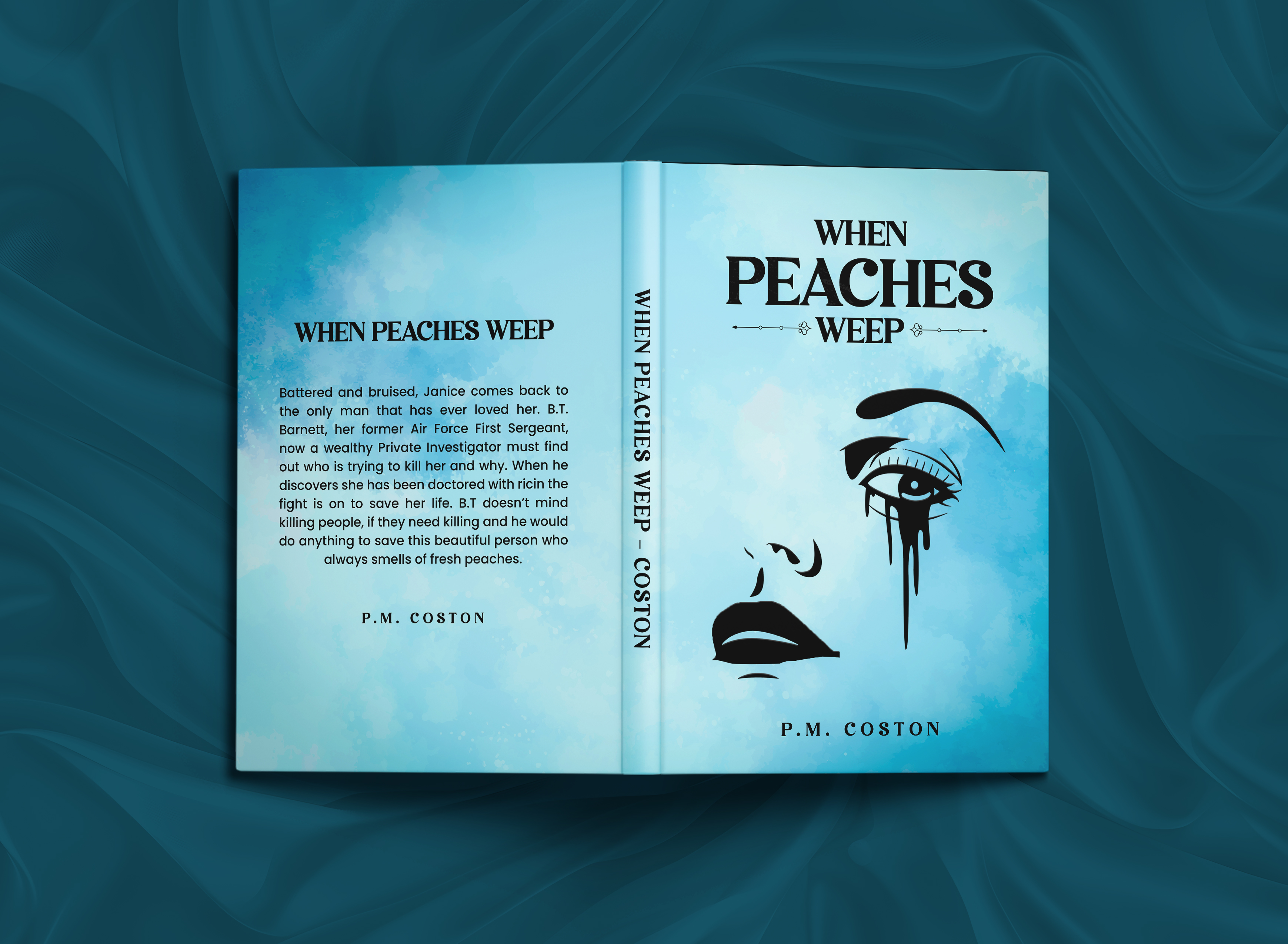
The Case B.T. Barnett Never Closed: Inside When Peaches Weep
A ricin poisoning. A beating meant to kill. A private investigator who won't let it go. This is the file that opens the B.T. Barnett series — and it doesn't read like fiction so much as a confession.
Every investigator has one file he can't shut. For B.T. Barnett — thirty years Air Force, eighteen of them Security Police, a man who did a tour in Vietnam and came home without a scratch he'll admit to — that file has a name on it: Janice.
She wasn't a client. She was the woman he loved before he had the nerve to say so. And when her husband decided that beating her half to death wasn't enough, and reached for ricin to finish the job, Barnett stopped being a bystander. When Peaches Weep opens with a knock on the door in the middle of the night and doesn't slow down from there — a woman poisoned in her own home, a private eye with the training and the fury to do something about it, and a race against a toxin that doesn't forgive mistakes.
The Investigator
Coston doesn't hand you a cardboard hero. Barnett tells his own story, first-person, in a voice that's equal parts drill sergeant and old friend leaning on a bar rail. He grew up around railroad men — a grandfather who drove steam engines in the yard, another who worked as a paymaster going station to station, a great-uncle who died on the rails before Barnett was born. That inherited grit followed him into the service: drafted toward the Marines, he talked his way into the Air Force instead, did his time as a Security Policeman, got sent to Vietnam anyway, and came home to build a second career as a licensed private investigator in a "growing community" that keeps him busier than he'd like. He's six-foot-six, plainspoken, and about as subtle as a freight train — which is exactly why you trust him the moment he starts talking.
The Victim Who Refuses to Be One
Janice Adams is not a woman who waits to be rescued. She enrolled in a state-approved investigative program long before the attack that nearly killed her, and even flat on her back in a hospital bed, fighting a poison built to shut her organs down one at a time, she's already planning the life she's going to have on the other side of it. That's the tension Coston builds the whole book around: a survivor who wants agency back the moment she can stand, and a man who loves her so fiercely he has to fight his own instinct to wrap her in bubble wrap and lock the door.
Her ex isn't a cartoon villain either — he's worse, because he's patient. A husband who chooses ricin over a gun understands exactly what he's doing: making a murder look like a mystery illness, betting that by the time anyone connects the dots, it'll be too late. That's the clock Barnett is racing against for most of this book, and it's the kind of slow-motion horror that lingers longer than a jump scare ever could — the horror of watching someone you love disappear a little more every day, and not knowing if you'll catch the cause in time.
The Underground Network
What makes the case disturbing isn't just the crime. It's how ordinary the danger looks from the outside. A quiet condo in Richmond. A trusted circle — a doctor willing to break the rules to save a life off the books, a convent running an underground clinic system, a safehouse tucked into a small town in upstate New York, guarded around the clock while Janice's body fights to recover. Coston builds a world where the people protecting Janice are almost as unconventional as the people trying to kill her: a physician who treats her outside the system entirely, a Mother Superior who arranges medical privileges through a network that keeps no official paper trail, a friend whose "quaint little house" becomes a fortress. Insurance never enters the picture — and that's not an accident. It's a deliberate choice to keep Janice invisible to the one person hunting her.
"Insurance was a no-no; J. Adams could run that to ground." — the quiet threat sitting underneath every chapter of this book.
Why It Works
What sets When Peaches Weep apart from a standard revenge thriller is how personal the danger stays. This isn't a detective solving a stranger's murder from a safe emotional distance. It's a man watching the woman he loves fight for her life in real time, narrating his own fear and fury without pretending to be tougher than he is. Barnett's voice carries the book — wry, self-deprecating, occasionally hilarious in the middle of genuine terror, the way real people cope with things that should be unbearable. One moment he's cracking a joke about buying an engagement ring too fast; the next, he's coordinating a covert medical operation to keep the woman he loves breathing. That whiplash between tenderness and dread is where the book earns its tension, chapter after chapter.
And underneath all of it sits a slow-burning question that horror and thriller readers both recognize: how do you protect someone from a threat that's already inside their bloodstream? You can't out-fight a poison. You can only out-think the person who put it there — and hope you're faster than the damage already done. That's the engine driving this book from the first page to the last, and it's why readers who started this series say they finished it in a single sitting, lights on, phone silenced, unwilling to stop until Janice was safe.
This isn't a bloodless procedural. It's personal, told first-person by a man who has spent his whole career reading danger before it arrives — and who, for the first time, isn't sure he'll see it coming in time. If you like your thrillers with real stakes, real poison, and a hero who bleeds for the people he loves, this is the file worth opening.